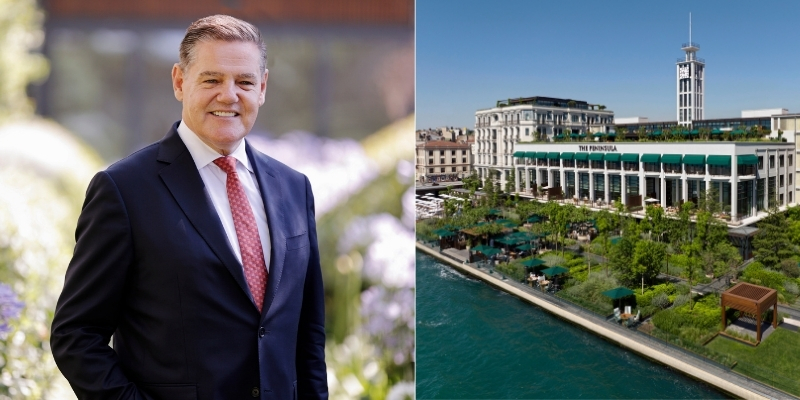
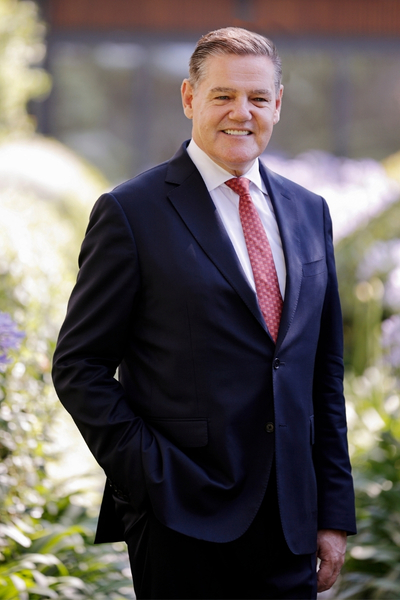
Located along the Bosphorus on a waterfront that has witnessed centuries of movement, encounters and transformation, The Peninsula Istanbul brings history, architecture and gastronomy together within a layered sense of place. The project, which preserved and revitalised three heritage buildings, connects Peninsula’s global legacy with Istanbul’s cultural memory through a balanced and timeless approach. Guided by General Manager Jonathan Crook’s perspective, The Peninsula Istanbul emerges as more than a hotel, becoming a living point of connection between the city’s past and present.
Some careers unfold like long journeys across a map. Cities change, kitchens, hotels and cultures become intertwined, and each new destination adds another layer to the story. Jonathan Crook’s professional journey has followed a similar path.
After years that took him from Chicago and New York to Beijing, Tokyo and Manila, his arrival in Istanbul feels like a natural continuation of the stories Peninsula has built across different cities.
“Throughout my career of more than 25 years, I have worked at six Peninsula hotels, in Chicago and New York in the United States, and in Beijing, Tokyo and Manila in Asia. I have now been in Istanbul for almost four years, and I am very proud to represent The Peninsula brand in Türkiye.”
Istanbul holds a particularly significant place in that journey for Crook. He sees the hotel’s Bosphorus location not simply as a view, but as a setting shaped by the many historical layers of the city.
“Our company’s investment in this waterfront location on the Bosphorus is truly extraordinary. I don’t think a hotel could ask for a better location.”
Building the Future Through Heritage
The story of The Peninsula Istanbul began not simply with the construction of a hotel, but with the reinterpretation of an existing heritage. Three historic buildings along the Karaköy waterfront had witnessed different chapters of the city’s life over the years. Today, they form the architectural backbone of the hotel.
“When we became involved in this project, the fundamental objective was to preserve and revitalise three heritage buildings that hold value for the community.”
The restoration process was therefore shaped not only by aesthetic considerations, but also by the idea of maintaining historical continuity. The decision to reconstruct the terminal building as an exact replica was an important part of this approach, intended to ensure that its architectural presence could continue into the future.
The result is an architectural language in which past and present coexist naturally. The memory of the buildings has been preserved while becoming part of a contemporary hotel experience.
A Gateway to the Rhythm of the City
The Karaköy waterfront has historically served as a point of passage. Merchant ships, ferries, travellers and different cultures have kept this stretch of Istanbul alive for centuries. The Peninsula Istanbul continues that role through a contemporary interpretation.
“A hotel has always been a stopping point for a weary traveller. Today, however, that idea is no longer limited to people simply passing through; it is about giving visitors from around the world the opportunity to experience Istanbul.”
This philosophy also extends to the hotel’s public spaces. Its gardens, waterfront and restaurants are designed not only for staying guests.
“We welcome not only hotel guests, but also Istanbul residents and the international community to spend time in the gardens, enjoy tea by the Bosphorus or join us for dinner.”
In this way, a waterfront that was once less accessible has once again become part of the everyday rhythm of the city.
A Global Brand with a Local Soul
One of Peninsula’s defining characteristics is the relationship its hotels establish with their destinations. Rather than separating the international identity of the brand from its surroundings, each property incorporates elements of local history and culture into its design and experience.
“What makes Peninsula unique is the deep respect for the history and community of each destination.”
At The Peninsula Istanbul, this philosophy can be seen throughout the property. From the interiors to the art collection, many elements are rooted in local craftsmanship and production. Marmara marble, traditional weaving techniques and works by Turkish artists form an important part of the hotel’s visual identity.
As a result, the hotel carries Peninsula’s international character while establishing a strong connection with Istanbul’s cultural fabric.
A Gastronomic Rhythm Throughout the Day
Gastronomy at The Peninsula Istanbul unfolds as a journey through different moments of the day. The experience begins in the morning at The Lobby, located within the former passenger terminal building, where tables extend towards the edge of the Bosphorus.
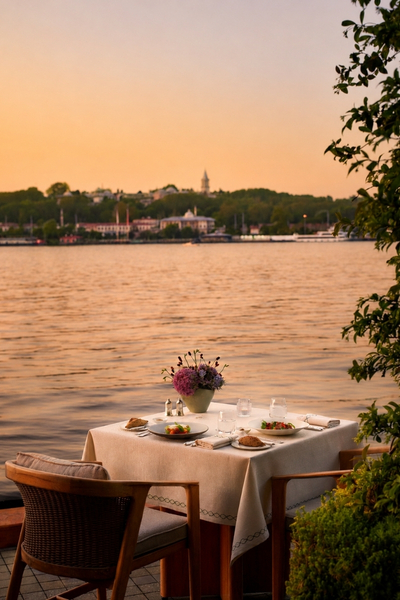
“Half of the tables are positioned right beside the water; beginning the day feeling as though you are sitting on the water is truly special.”
Later in the day, Afternoon Tea, one of Peninsula’s longstanding traditions, takes centre stage. The ritual traces its origins back to The Peninsula Hong Kong in 1928.
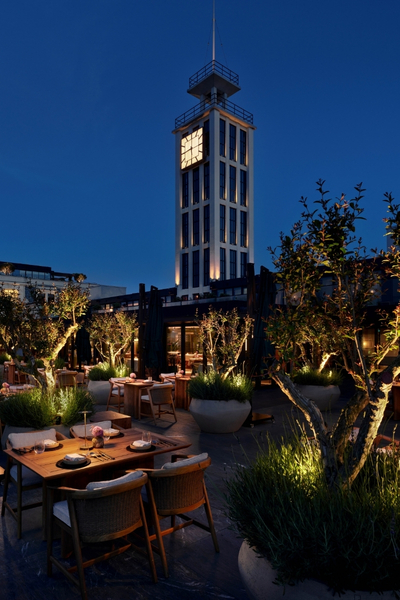
As evening arrives, the focus shifts to the hotel’s rooftop restaurant, GALLADA.
Reinterpreting the Silk Road at the Table
GALLADA’s culinary identity was developed together with consultant chef Fatih Tutak, drawing inspiration from Istanbul’s historic position at the crossroads of cultures.
“GALLADA was conceived as a gastronomic journey bringing together flavours, herbs and spices that travel from Anatolia towards China.”
The restaurant’s approach brings together culinary influences associated with the Silk Road through a contemporary perspective. Rather than presenting a single culinary tradition, GALLADA becomes a meeting point for different food cultures and their shared histories.
More Than a Meal, a Moment
A memorable hotel dining experience is not defined solely by what arrives on the plate. Often, what remains in memory is the moment created around the table.
“A true gastronomic experience is not only about the food; the atmosphere of the space, the rhythm created by the service team and the entirety of the moment experienced by the guest are all part of it.”
When the Bosphorus, architecture and culinary creativity come together, the experience extends beyond dining and becomes a new memory connected to Istanbul.
The story of The Peninsula Istanbul is written through precisely these moments: a morning beginning beside the water, a table overlooking the Bosphorus at sunset, and a new connection formed with the many layers of the city’s memory.